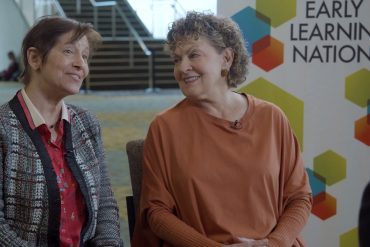
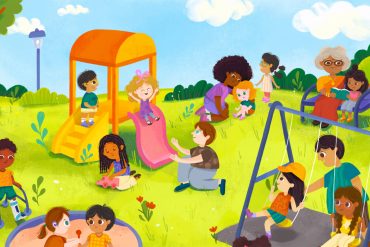
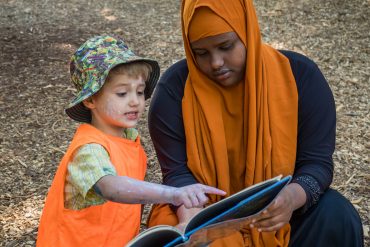
The pressure to over-program kids often seems endless – so much so that a simple, old-fashioned idea has fallen to the side: Children should play. Roberta Michnick Golinkoff & Kathy Hirsh-Pasek – researchers and co-authors of “Becoming Brilliant, What Science Tells Us About Raising Successful Children” – explain their “Learning Landscapes” program, where they help local municipalities turn public spaces like bus stops into child-friendly play zones.
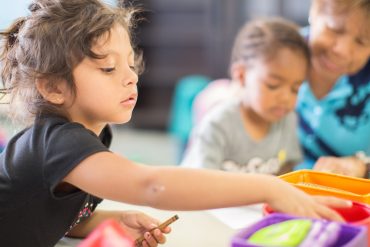
The children attending Tiny Trees Preschool classrooms in Seattle and King County parks may look like they’re “just playing,” but those little boots are actually marching, climbing, stomping and squishing their way to a well-rounded preschool education.
Developed in the 1990s, Quality Rating and Improvement Systems (QRIS) aim to increase the availability of high-quality early education programs,...
Across the U.S., colleges and universities have pledged to enhance diversity and to prioritize inclusiveness. In the wake of the...
The New Year, with its metaphor of clear vision, calls out to all of us to think about the future; to envision a better world for children, youth, and families. While we can’t predict what the decade will bring, we can use what we have learned over the years—and our common sense—to set some goals and move forward. Here is what I see and hope for in a new year, in a new decade.

The United Nations has declared June 11 to be the first annual International Day of Play, calling it “a unifying...
The Founding Fathers built competition among the states into our system of government. With 50-plus laboratories for democracy, we’re bound...
Throughout most of human history and in most of the world, that paradigm of children playing outdoors as a part of childhood has been so integral as to be transparent. Not so in the U.S., where, according to the Child Mind Institute, the average American child spends four to seven minutes a day in unstructured play outdoors and more than seven hours a day in front of a screen. Washington State is changing that.
Building Young Brains When Schools Are Closed, Part 2: Online Tips and Activities
Our Top Tips for Parents and Caregivers
This is part 2 of a a three-part series. Read Part 1 (Offline Activities) and Part 3 (Outdoor Tips). How...
The World Health Organization (WHO) has issued its first-ever guidelines on screen time for children younger than 5, recommending no...
Author’s Note: This moment, when the world has stopped spinning on its axis, presents an important opportunity to re-examine our...
Our Child Care Facilities Are in Crisis But There Are Solutions
Business, Nonprofits, Chambers of Commerce Build Coalitions
In the morning, as children dash into their preschools and home-based care sites, hanging coats and finding favorite toys or...