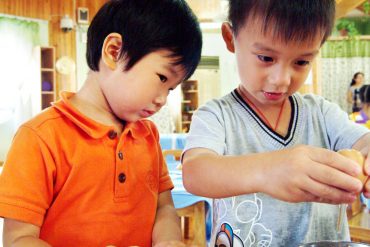
Though family and faith are at the core of traditional Latino culture, and strong support for education is a powerful...
Maria Montessori’s Influence on Early Education
Part 1 of a 3-Part Series
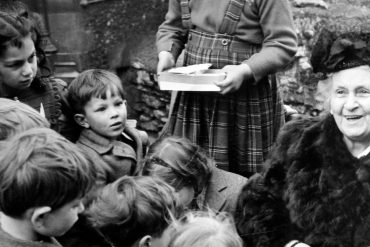
Part I: From Italy to the World Maria Montessori (1870-1952) might not be quite as famous as her near contemporaries...
Our Child Care Facilities Are in Crisis But There Are Solutions
Business, Nonprofits, Chambers of Commerce Build Coalitions
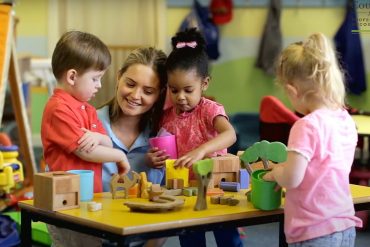
In the morning, as children dash into their preschools and home-based care sites, hanging coats and finding favorite toys or...
Playful Learning Landscapes
Meeting Children Where They Are with What They Need
Plaza. Piazza. Town square. The names may differ region to region, but they describe similar spaces: a place where residents...
Researchers presenting at the recent 2019 Zero to Three conference detailed a program that studies have found effective in treating...
Art and Soul: Teaching Zuni Art Across Generations
Zuni Youth Enrichment Project Connects Renowned Artists with Students for Art and Entrepreneurship
On a recent Friday afternoon, student artists at the Zuni Youth Enrichment Project (ZYEP) were busy getting ready for an...
The New Year, with its metaphor of clear vision, calls out to all of us to think about the future; to envision a better world for children, youth, and families. While we can’t predict what the decade will bring, we can use what we have learned over the years—and our common sense—to set some goals and move forward. Here is what I see and hope for in a new year, in a new decade.

Maria Montessori Myth Busting
Part 2 of a 3-Part Series
The history of its proliferation and multi-pronged institutional dissemination has fostered a degree of confusion and myths about the founder’s intentions and how the method is practiced.
When three in 10 candidates who sign up for your program don’t make it to the end, you know you...
On December 15, The Campaign for Grade-Level Reading (CGLR) hosted a funder-focused webinar to discuss mechanisms by which research translates into policies that impact our nation’s families and children, particularly those living in poverty.
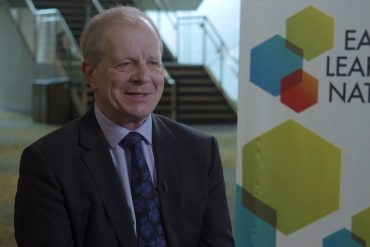
How and why do children become aggressive – or even violent? How can we understand the true causes – and recognize the signs – before they take hold? Kenneth A. Dodge, Pritzker Professor of Public Policy at Duke University explains the important research that can help children and families. Filmed for Early Learning Nation’s Mobile Studio at the Society for Research in Child Development’s biennial meeting in Baltimore, MD, on March 22, 2019. #SRCD19
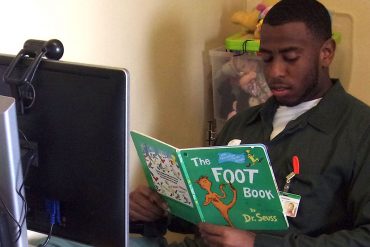
2.7 million children (1 in 28) currently have an incarcerated parent. How are programs like the Family Connections Center helping them get ready to be with their families again-- while still behind bars?