


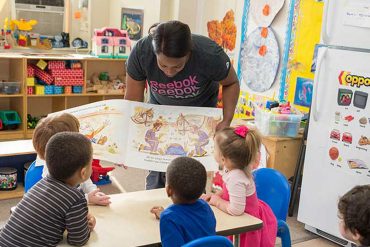
When most people talk about designing an early childhood education program, they mean the curriculum, the funding, or the program. Not Dr. Sandra Duncan. When the Design Consultant for Early Childhood Classrooms and Adjunct Professor at Nova Southeastern University talks about designing, she means it literally.

Author’s Note: This moment, when the world has stopped spinning on its axis, presents an important opportunity to re-examine our...
As the U.S. finally appears to be coming to grips with how essential childcare is to future economic growth—and how...
Because we can’t take our Early Learning Nation Studio on the road during this time, stay tuned as ELN recaps...
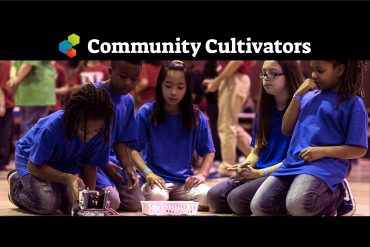
Make. Learning. Relevant.
Dean Kamen’s Vision for Building Community
Imagine a world where baseball is a subject taught in school. Just one thing is missing from this imaginary curriculum: the students never actually get to play the game.
In September, they open their textbooks and read about the origins and rules of baseball. After winter break they take tests on pitching and hitting records set by the greatest players. By the spring, classes delve into the nuances of base stealing and bunting.
So what if they never swing a bat themselves or catch a line drive, right? It’s not like any of them are going to become professional ballplayers, right?
To Dean Kamen, this scenario is no more absurd than the way math and science have been taught traditionally.
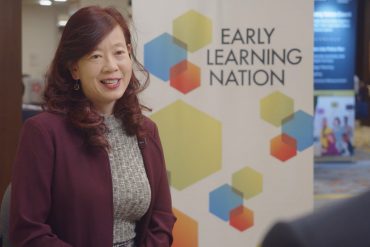
As Fremont (CA) Mayor Lily Mei notes, for four of the past five years, Fremont has been listed as the happiest city in the U.S. The city also boasts incredible diversity, drawing families across multiple backgrounds and a range of languages. One area where that diversity pays off is in education. With some 35,000 kids and 42 schools, Fremont has focused on building new early learning centers, high-ranking schools and equitable access, including with special-needs pre-K programs.

Considering how often we say we care about children in the U.S., one might assume we’d be able to point...

The idea is so logical it almost goes without saying: It is better, smarter and more efficient to handle small...

Economists are famously bad at predicting the future. (There’s even an old joke: Why did God create economists? To make weather forecasters look good.) Nevertheless, thinking like an economist can help prepare us for what lies ahead for our children.

While we see the tyranny of merit most active in K-12 and higher education, school readiness is the Trojan horse through which it has breached the world of early childhood.

What We Can Learn From Red States’ Approaches to Child Care Challenges
Which policies have earned cross-partisan support and could be a good fit for North Carolina’s early care and learning landscape?
Policymakers across the political spectrum ran for office on child care issues in 2024. From the presidential campaigns to local...

In 1999, addressing AmeriCorps members on the program’s fifth anniversary, President Bill Clinton said, “There is no question that you...