
A national survey conducted by the Bipartisan Policy Center in 2021 found that of the 31% of working-parent households that...

5 Top Takeaways from the Prenatal-to-3 Policy Impact Center’s Summit
New State Policy Roadmap Published

Last month, the Prenatal-to-3 Policy Impact Center (PN-3) at Vanderbilt University hosted the 2022 Research to Policy Summit to mark the publication of its annual State Policy Roadmap.
Early Learning Nation columnist Elliot Haspel recently joined Capita as a Senior Fellow working on establishing a new philanthropic fund...
After decades of disinvestment in child care that went largely unnoticed, the pandemic knocked the fragile system even more off...
New York City’s 60-year-old Fight for Universal Child Care
Today’s Activists Are Part of A Long, Historic Struggle. Will They Succeed?

As a federal plan to make child care affordable languishes in Congress, New York City has joined the growing number...
Innovations in Child Care: Meeting Parents’ Diverse Needs and Preferences
Part 2 of a 5-Part Series
Our country is in a child care crisis, exacerbated by the pandemic, which has shown how difficult it is for...
Back in May, I had the privilege to present the closing keynote address at the Child Care Services Association annual conference in Chapel Hill, North Carolina. One point that several attendees told me resonated was when I showed that you can make many different arguments for child care, although advocates tend to focus primarily on only a few.
Rachael Katz (MS Ed.) and Helen Shwe Hadani (Ph.D.) are excellent companions for mothers, fathers and caregivers of young children. Their views on parenting derive from their own families, as well as extensive reading into the science of brain development.
When three in 10 candidates who sign up for your program don’t make it to the end, you know you...
As I travel internationally, I have been thinking a lot about how we position child care in the United States. I am increasingly concerned by an ascendant school of thought that emphasizes a role for employer-sponsored child care benefits.
Here are five principles Dutta-Gupta keeps in mind while leading an anti-poverty organization dedicated to ensuring that policies, programs and practices advance racial equity.
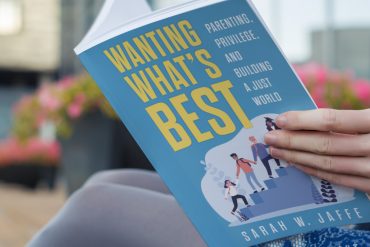
Jaffe doesn’t blame parents of privilege—a category to which she belongs—for the terrible circumstances of other children’s lives, but she does make clear that we all have a responsibility and a role in creating and perpetuating that disparity.